Is Mustard Healthy? Real Benefits, Side Effects, and How to Choose a Clean Jar

One morning while spreading sharp yellow mustard on toast, a simple question popped into my head: it tastes great and sits in almost every fridge, but is mustard actually healthy – or just a spicy condiment with no real benefits?
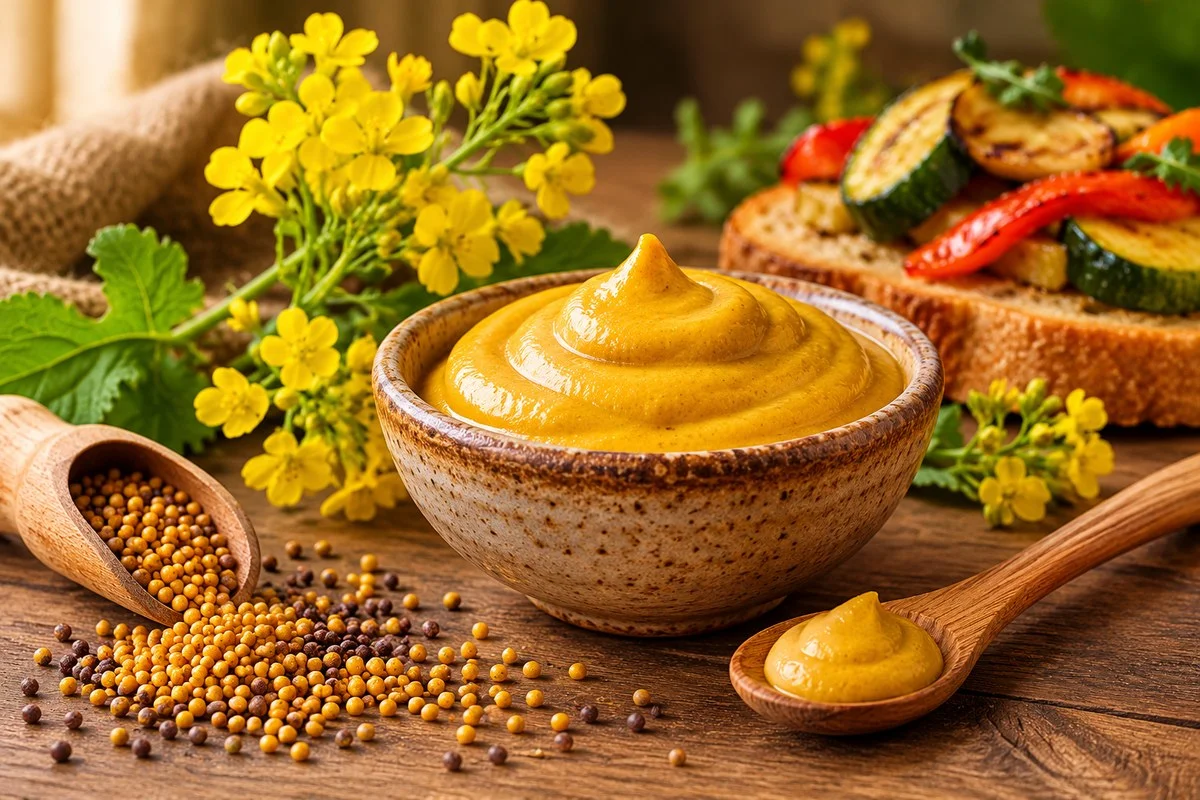
Once you strip away medieval folk myths, plain mustard turns out to be one of the cleanest, lightest condiments in the kitchen – alongside a few clear medical caveats worth keeping in mind.
Real Health Benefits of Mustard
People have been grinding white, yellow, and brown mustard seeds with vinegar since ancient Rome. From a practical modern nutrition standpoint, its real advantages are straightforward:
- Very low calories compared to heavy sauces: a teaspoon of classic yellow, Russian, or Dijon mustard has only about 5–10 calories and virtually no fat, making it an easy swap for mayonnaise or sugary barbecue sauces.
- Digestive kick with rich meals: pungent compounds in mustard seeds (such as allyl isothiocyanate) stimulate saliva and digestive juices, which is why mustard pairs so naturally with roasted meats and hearty dishes.
- Antioxidants and trace minerals: mustard seeds contain glucosinolates (like sinigrin), selenium, magnesium, and small amounts of omega-3 fats – especially in coarse whole-grain varieties.
- Handy in cooking and marinades: mustard acts as a natural emulsifier for vinaigrettes and helps tenderize tougher cuts of meat without heavy oils.
- Bonus kitchen trick: dry mustard powder cuts grease remarkably well in hot water, making it a classic chemical-free way to wash oily pans.
What About Mustard Plasters and Old Folk Claims?
Older blogs still repeat claims that eating mustard on an empty stomach sharpens intelligence or that mustard wraps melt body fat. None of that holds up. Traditional mustard plasters simply irritate skin nerve endings and increase local blood flow, creating warmth – they do not cure viral infections and should never be used during a fever or on sensitive skin, where they can easily cause burns.
Who Should Limit Mustard and What to Check on the Label
Like any pungent spice, mustard is not for everyone:
- Sensitive stomach or reflux: if you have gastritis, stomach ulcers, or frequent acid reflux (GERD), spicy mustard oils can irritate the lining and trigger heartburn.
- Mustard allergy: mustard seed is one of the 14 major regulated food allergens in Europe and can cause serious reactions in sensitive people.
- Sore throat: during an acute throat infection, sharp mustard can sting already inflamed tissue rather than soothe it.
- Hidden sugar and sodium: honey-mustard and sweet commercial sauces often pack added sugar, thickeners, and high sodium. Look for a short ingredient list: water, mustard seeds, vinegar, salt, and spices.
As long as your stomach handles spice well, a spoonful of clean, whole-grain or classic mustard is one of the smartest ways to wake up a simple meal without piling on empty calories.