Spasiv Skyt, Pershotravneve — an Ingress Trip with History
On Saturdays I usually have Ingress targets (portals) somewhere in the region. This Saturday I was lucky to end up in an interesting and in its own way unique place — the village of Pershotravneve, Zmiiv district, Kharkiv region, Ukraine.

What was special about this place, and why did I go there?
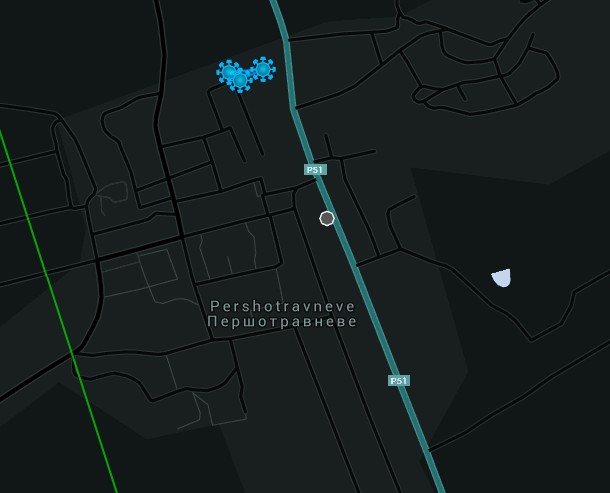
There were three old portals that had stood for about 140 days, which meant no time to lose — I had to go and capture them 
I usually plan a route and go, most often by bus, preferably without changes, and walk the rest of the way.
It turns out there’s a bus to Pershotravneve — Kholodna Hora – Taranivka (timetable):

Kharkiv – Pershotravneve – Taranivka bus route:

(Timetable as of 2015–2016.)
I planned to take the 9:20 bus but overslept, and by the time I’d eaten I’d missed the 10:10 too
So I took the first bus to Merefa – Selektsiyna, and there I checked the navigator: about 16 km to go…

Quite a lot, but I’ve walked more, and sometimes you need to stretch your legs
The road felt long; it was a bit cloudy and cool, but fine overall. Then, with less than a kilometer to go, I could see the portals in the scanner, and things got more fun.
In the distance — the dome of a chapel and a sign: Spasiv Skyt.

It turns out Spasiv Skyt (the Saviour’s Hermitage) is a unique place with a fascinating history!
On October 17, 1888, the imperial train traveling from Sevastopol to Moscow crashed near Borki. Two heavy freight locomotives were pulling a 17-car train at a dangerously high speed; the train started swaying and derailed on a curve. Russian Emperor Alexander III and his family were on board.

A popular legend says Alexander III, thanks to his enormous strength, held up the falling roof of the carriage and saved his wife and children. In reality, the imperial family in the dining car survived because its walls shifted and kept the roof from collapsing. Still, 21 people died in the disaster and 35 were injured.
The family’s miraculous survival led to many churches being built to commemorate it. In 1891–1894, the Church of Christ the Saviour and the Chapel of the Holy Saviour Not Made by Hands were built at the crash site, designed as a single ensemble by architect R. Marfeld.
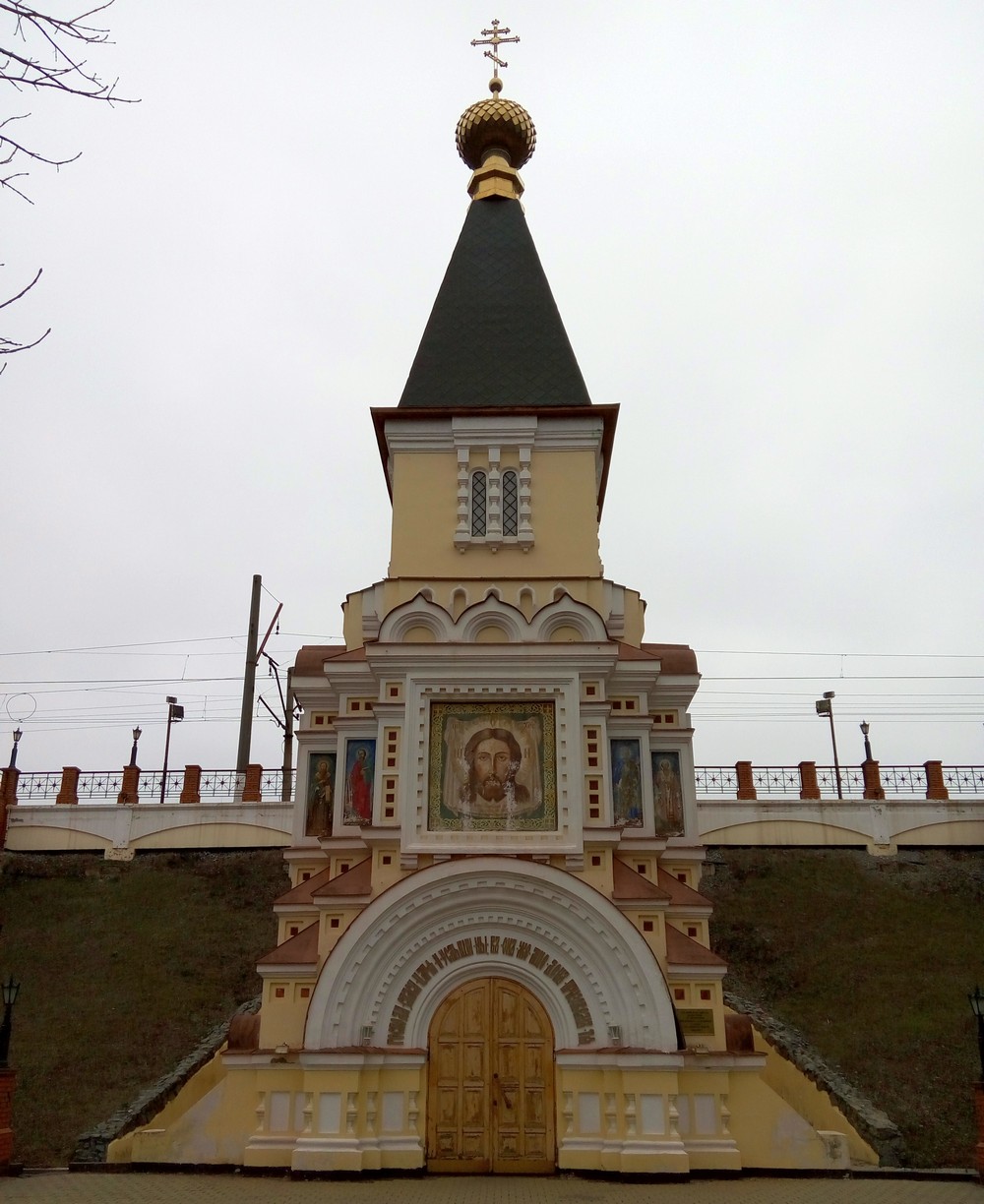
In summer, when everything is green, or in winter under snow, the view must be stunning!
The church, built for 700 people, stood 60 meters from the railway embankment, in the 17th-century Russian-Byzantine style, surrounded on three sides by a covered gallery, with its altar facing east — toward the railway.
The chapel was built on the spot where the dining car had been. It had a cave-like lower part inside the embankment and a four-sided tower with a golden dome and a cross. The gilding was done with gold leaf, and the facades were decorated with mosaic tiles made in the workshop of the Imperial Academy of Arts.

The site was first run by the Sviatohirsk monastery and later by the Ministry of Railways. With railway money and donations, a hospital and a home for retired railway workers, a parish school and a free public library were built here.
The hermitage attracted many pilgrims, and the emperor himself visited several times. During World War II the church was completely destroyed, and the chapel lost its dome and was used as a warehouse for many years.
Video: the reopening of the Spasiv Skyt chapel
In 1992 local residents began restoring the chapel. The Southern Railway later joined in, and the reconstruction was completed in the summer of 2003. Now, on Sundays and holidays, all suburban trains from Kharkiv toward Lozova make a short stop at the Spasiv Skyt platform so pilgrims can visit.
After walking around and taking photos, I captured the portals.

On the way to the bus stop I saw this bull — the Chervonyi Veleten breeding farm

Locals told me a bus to Kharkiv and a train to the Pivdennyi station were due in 5 minutes. I went to the bus stop and met a group of cyclists who had also come to see the local sights.

They rode off toward Taranivka, and I headed home, watching from the bus window the road I had walked just a while ago


