TP-Link Omada: A Cloud-Managed Business Network (SDN)

It turns out TP-Link has an interesting product for building business networks – TP-Link Omada, a software-defined network (SDN) with cloud management.
 TP-Link Omada
An Omada SDN network brings together access points, switches and gateways, and you can manage all of it centrally from a single interface – including through the cloud.
Who Omada is for
Omada builds a scalable network with one management interface for wired and wireless connections. It’s designed for hotels, schools, retail, offices and more.
This isn’t your classic home TL-WR841ND or similar gadget. The Omada series is equipment for business, where network requirements are much higher: high reliability, security, performance and convenient configuration management.
 Omada – a network for business
What an Omada network is made of
- Access points – the EAP series: ceiling, wall and outdoor models.
- Switches – JetStream.
- Gateways and routers – Omada.
- A controller that manages all of it.
Three types of controller
- Software (Omada Software Controller) – free, installed on your own computer or server. How many devices it can handle depends on the hardware.
- Hardware – a small separate box: the OC200 for small networks, the OC300 for larger ones.
- Cloud-based (Cloud-Based Controller) – runs entirely in TP-Link’s cloud, no hardware of your own needed, but the licenses are paid (there’s a free trial).
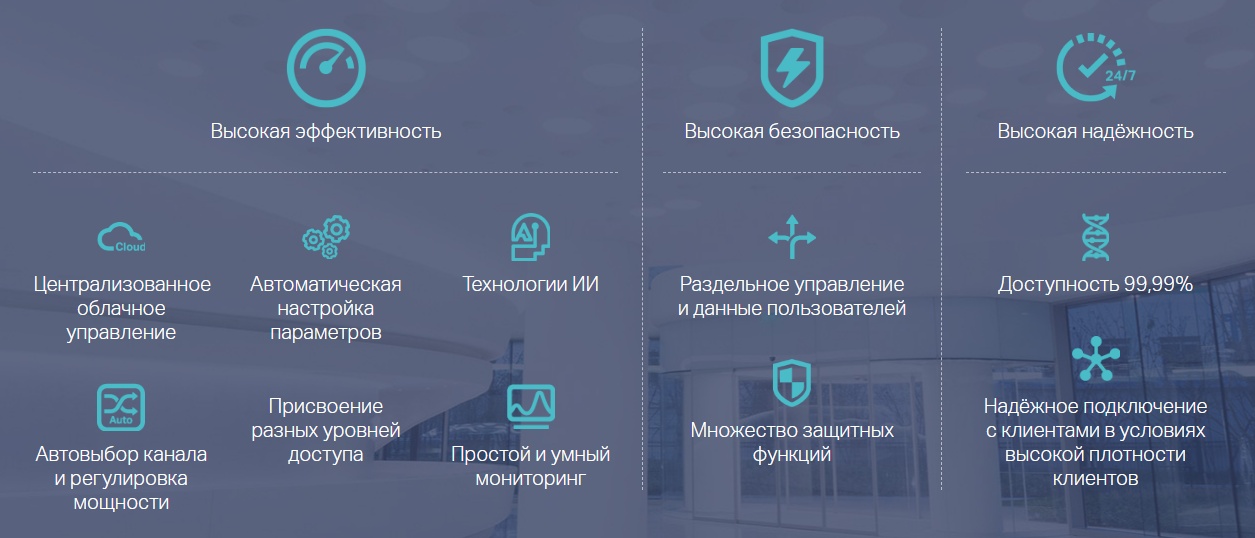 Business-grade network reliability
Why a business needs reliable Wi-Fi
I remember how, in a good five-star hotel in Turkey, the Wi-Fi in our room kept glitching: the equipment was D-Link, and judging by the symptoms it couldn’t hand out IP addresses via DHCP. Three technicians gathered to diagnose it :-) That shouldn’t happen: a business needs a stable, reliable network.
 Omada for business
My take
On paper, Omada looks interesting. I haven’t had a chance to work with this series hands-on, but I’ve seen good reviews online, which is why it caught my attention. For a small office or hotel, the cheapest route is EAP access points plus the free software controller: you can start with a couple of devices and expand the network as you grow.